Categories
Financing & Insurance

How to Finance a Roof — Repairs, Replacements, and Solar-Ready Upgrades

A roof is one of the most important parts of your home — but it’s also one of the most expensive to fix or replace. Whether your roof is leaking, sagging, or just too old to support solar panels, the costs can pile up quickly. Fortunately, financing gives you options.

This guide breaks down everything you need to know about financing a roof, whether you’re patching a leak, planning a full replacement, or upgrading for solar panels. We’ll keep it simple, helpful, and straight to the point.

Why You Might Need Roof Work — and Fast

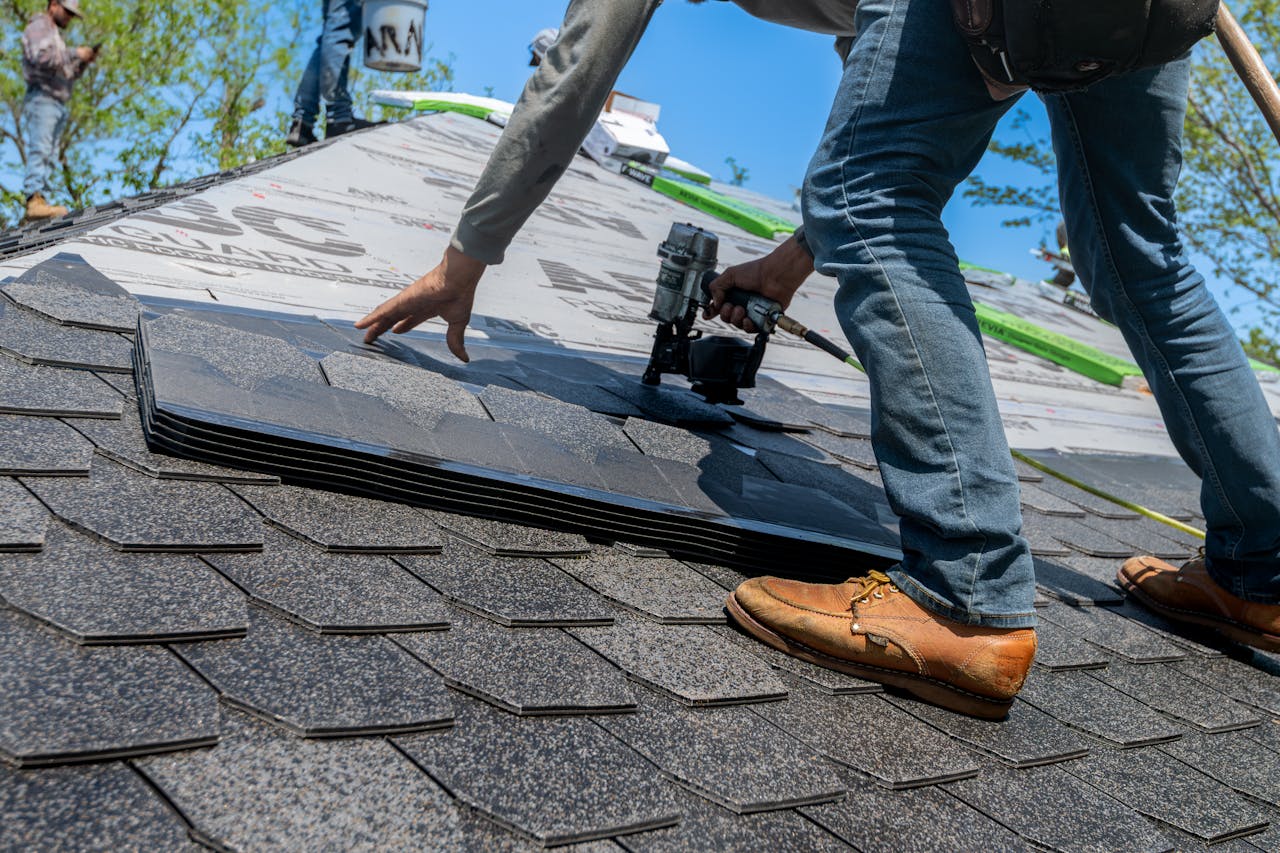
Roofs don’t last forever. Most asphalt roofs last around 15 to 25 years. Over time, shingles crack, leaks form, and weather takes its toll. You might not even notice the damage until you get a roof inspection — often when planning to install solar.

If your roof is showing signs of age or damage, fixing it isn’t optional. A small leak can lead to water damage, mold, insulation problems, and even structural rot. Waiting too long can cost you double.

Solar twist: Many homeowners find out their roof needs replacement when preparing for solar installation. Solar companies won’t install panels on weak or damaged roofs — it’s just not safe.

What It Might Cost You (Ballpark Figures)

Roofing prices vary based on where you live, how big your roof is, and what kind of materials you choose. But here’s a rough breakdown to expect:

  • Minor repairs: $150 – $1,500
  • Major repairs: $1,500 – $7,000
  • Full replacement: $5,000 – $20,000+
  • Solar-required roof upgrade: Add $2,000 – $10,000
  • Solar panel system itself: $10,000 – $25,000

Important: Always get at least two quotes. And make sure your contractor is licensed and insured. Use our directory to find a roofing contractor near you.

Smart Ways to Finance a Roof

You have more options than you think — but some are smarter than others, depending on your budget, home equity, and credit score.

1. Home Equity Loans or HELOCs

These let you borrow against the value of your home. Rates are lower than personal loans, and repayment terms are flexible.

  • Home Equity Loan: One-time lump sum
  • HELOC: Like a credit card you draw from when needed

⚠️ Heads-up: Your home is on the line if you don’t repay.

2. Personal Loans

Great if you want fast cash without tapping into home equity. These are unsecured, so no collateral needed.

  • Quick approval
  • Fixed monthly payments
  • Higher interest rates than home loans

3. Roofing Company Financing

Some contractors offer in-house financing or connect you with lenders. This can be convenient, but always read the fine print.

  • Easy to apply
  • Often includes “same-as-cash” promo periods
  • Watch for hidden fees or high rates after promo ends

4. Government Programs & Assistance

For low-income homeowners or storm damage cases, there are helpful programs:

  • FHA Title I Home Improvement Loans
  • USDA Single Family Housing Repair Loans
  • State or local energy-efficiency grants

5. Credit Cards (Short-Term Fix)

Only use this if you’re tackling a small repair and can pay it off quickly — ideally during a 0% interest intro period.

What If You’re Getting Solar?

If you’re planning solar, get your roof checked first. A failing roof can’t support panels, and removing them later to fix the roof is expensive and time-consuming.

Some solar companies offer bundled loans that include both the solar system and the roofing upgrade. That can simplify things — just make sure your monthly payment still makes sense.

Also, look into PACE loans in your area. They’re designed to fund energy-efficient upgrades like roofing and solar and are repaid through your property taxes.

Common Questions People Ask

Will insurance pay for a new roof?
Only if the damage is from a covered event (hail, wind, storm). If it’s old age or wear-and-tear, you’re on your own.

What credit score do I need?
Most lenders want a 600+ score. For the best rates, aim for 700 or higher.

Can I finance just part of the roof?
Yes. If you’re repairing only a section or doing phased work, you can finance just that part.

Can solar loans cover roof upgrades too?
Often, yes. Many solar financing plans allow you to wrap in roofing costs.

Is roof financing worth it?
If the alternative is water damage, mold, or a failed home inspection — 100%. Financing gives you time to pay without risking bigger problems.

Final Take: Don’t Wait for It to Leak

Putting off roof work never ends well. The longer you wait, the more damage your home can take — and the higher the bill climbs.

Financing gives you a way out. You don’t need cash in hand to fix your roof, protect your home, or prep for solar. You just need the right plan and a clear path forward.

Next step? Get your roof inspected, collect a few quotes, and compare financing options side-by-side. Ask questions. Take your time. But don’t delay the work — your future self will thank you.


Categories
Financing & Insurance

Solar Panels For Low-Income Families

When people think of solar panels, they are usually envisioning wealthy households. After all, these are the individuals who can afford to buy new homes with them. They are also the ones who can afford a high-cost solar system in their homes. 

However, people from all income levels should be considering solar panels. This movement towards a cleaner environment affects everyone, so even lower-income families should get incentives to do so. 

This is exactly the initiative behind the programs that are coming out to fit solar panels into homes of families with low income. In the following article, we will explore what is available for families who are considering solar panels but who are also on a strict budget.

California’s Single-Family Affordable Solar Homes (SASH) Program

The state of California decided to make a program that gives solar panel access to people with low income. There is also a MultiFamily Affordable Solar Homes (MASH) initiative as well.

In these two programs, people who are low income and who qualify will get rebates on their renovations. 

Right now, SASH is offering $3 per watt. The home must also be classed as affordable housing under California Public Utilities Code 2852. 

Grants From the Federal Government

The federal government is also very invested in helping low-income families get solar panels. Right now, the government is offering 22% off of a system that a family installs. It is called an Investment Tax Credit (ITC). 

A couple of years ago, it used to be 8% more, but there have been some cuts. Right now is still an ideal time for families to capitalize on this program before the program is cut altogether. 

One advantage of this rebate is that it can be used in conjunction with other rebates. For example, there are other grants out there that do not even need to be repaid.

Grants From the U.S. Department of Energy

There are grants that come from the U.S. Department of Energy’s Office of Energy Efficiency and Renewable Energy. While these grants are not necessarily geared at low-income families, low-income families will be able to qualify if they apply. 

A candidate should go to the website for more details. There are grants on there such as the Green Retrofit Grants, Tribal Energy Program, REAP Grants, High Energy Cost Grants, and Renewable Energy Grants. 

Some of those listed are for tribal lands or rural areas only. However, the Renewable Energy Grants is an after-the-fact tax credit.

The one on the list that is specifically aimed at low-income families is the Green Retrofit Grant. The government will work with people that are in low-income areas to install the panels. The grants must be used within two years of them being granted. 

State Utility Rebates

These rebates usually come to the state through the federal government. They are disbursed in the form of rebates. The rebates can be up to several thousand dollars. 

Solar Loans

While loans might not seem as utilitarian as a grant, they can still help a savvy consumer to install the solar panels and then pay later. Unfortunately, they operate as lien on the home. However, the family will start saving on an electrical bill after the installation, so it can be easy to use that money to pay back the lien. 

Once the debt is paid off, the low-income family can benefit from a reduction in bills in general. The terms of these of usually seven to 20 years, but they are well worth it. 

The loans available are the FHA PowerSaver, Multi-Family Housing Loan, and Rural Utilities Service Electric Program. The Multi-Family Housing Loan is the one that is specifically aimed at low-income families. 

Solar Tax Credits

These are offered by the Internal Revenue Agency. The IRS will pay 30% of the tax liability of the installation cost of solar panels in tax credits. However, this is just on the tax liability portion, so not the entire installation cost. Still, every little bit counts, and getting tax credits can help to soften the blow. 

Colorado Rooftop Low Income Program and Other State Programs

This program is unique because the Colorado Energy Office will actually subsidize the entire cost of the installation. However, the stipulation is that the family must have an income of 200% or less than the federal poverty level. For a one-person household, this is $12,880. That means that a person who has an income of $25,760 can still qualify. 

The poverty level goes up for every additional family member. For example, the poverty level for a family of four in 2021 is $26,500 which is more than double that of a single-family home. The other condition is that the family must own the home.

There are other state programs such as the Connecticut Green Bank Low Income Residential Solar Incentive Program, the Hawaii Green Energy Market Securitization On-Bill Repayment Program (GEM), Illinois Solar For All Program, Massachusetts Solar Renewable Target Program, Massachusetts Solar Loan Support Program, Minnesota Xcel Energy’s Solar Rewards Program, New York Affordable Solar Program, ​California’s Low-Income Weatherization Program, and Washington D.C. Solar For All Program. 

Conclusion

The government has really been prioritizing clean energy lately. The sun is a renewable source of energy that we can harness forever. It would make sense that the government would want homes to be transitioning to this source. 

There have been barriers for citizens traditionally in obtaining this type of energy. The barriers of income can be a very powerful force that would dissuade a family from ever considering solar panels. 

The above solutions can help to offset the costs and in turn, create a more sustainable future. The movement is to go away from fossil fuels, so people who help the cause are really aiding in a national and global movement. The homes will also have better resale value as the priorities continue to be that people would get into sustainable developments. 

Ultimately, these grants, incentives, and loans can help to make a project happen that would never have been possible before, especially on a limited income.

Frequently Asked Questions


Are There Any Grants Available For Solar Panels?

Yes, there are several government and private funded grants available to US homeowners for solar installation.

Do You Get Tax Credit For Installing Solar Panels

A solar PV system must be installed before December 31, 2019, to claim a 30% credit. It will decrease to 26% for systems installed in 2020 and to 22% for systems installed in 2021. And the tax credit expires starting in 2022 unless Congress renews it. There is no maximum amount that can be claimed.

Do States Offer Solar Rebates

Yes, many states offer solar rebates for home solar power systems

Are There Any Low-income Solar Incentives

Yes, several states offer solar installation grants and rebates for low income households.

Categories
Financing & Insurance

Home Renovation Grants For Veterans

Home improvement jobs can be costly and time consuming. Fortunately for veterans, the US government and a few private organizations offer grants and aid to help them with their home modification projects. 

There are many helpful programs that the American government offers back to veterans but many veterans are unaware of these programs and grants. Home renovation grants are one of these government backed programs that many veterans are unaware of. 

These grants can help you to improve your home and quality of life. The sad thing is that many veterans just don’t know about what is being offered to them. If you have a home and you’ve been thinking about upgrading it, then you can take advantage of one or several of these grants. They will help you to feel better in your surroundings and give you the convenience and nice aesthetics that you deserve.

Single-Family Housing Repair Program

This program is offered through the U.S. Department of Agriculture’s Rural Development Division. Basically, it has a few restrictions though. For one, a person needs to be above 62 to apply. Additionally, the maximum amount of money is $7500. 

People in this program must be low-income. In fact, the person has to have 50% lower than the median income for the area. Additionally, the person must be unable to get other funding and not be able to pay back a loan. 

Basically, this is a good grant if someone needs some minor repairs and is getting older but wants to live in the home or fix it up before selling.

Specially Adapted Housing Grant (SAH)

This is a special grant for people that have been physically disabled by the war. The grant is quite a substantial amount of money at $67,555. Most of the veterans who have this grant are in wheelchairs. 

They are able to then live more comfortably in their homes as it is possible to get around it more easily. One example of a reno could be a stairlift to get the wheelchair to the upstairs or a ramp to be able to wheel into the house. Those who apply for this can also apply for the Home Improvement and Structural Adaptation Grant.

Home Improvement and Structural Adaptation Grant 

These grants vary with the veteran’s amount of service. The grants can be from $1200 to $6800, so they are just small grants to do some minor adjustments. These can be used to upgrade the bathrooms or do any other number of renos such as electrical. They can even be for walkways or better kitchen appliances. 

One unique feature of this grant is that it is for people that have been disabled through life circumstances other than those related to their service. These changes though must be directly related to helping the disability. The veteran can also get the SAH or the SHA

Special Home Adaptation Grant (SHA)

This grant is up to $13,511. It will help people with permanent disabilities to be more mobile in their homes. This differs a bit from SAH because it is not as extensive. 

It may be for people whose disability is less severe than being confined to a wheelchair, such as someone who lost a limb. 

It may also accommodate a different type of disability, such as someone who is blind. Those who apply for this should also apply for the Home Improvement and Structural Adaptation Grant. 

Private Foundation Grants

The above grants are all given by the federal government. However, there are other grants that are out there. For example, there is the Admiral Roy F. Hoffmann Foundation. This is a grant of up to $8,000 for those people that were wounded during the war. 

Also, there is the HelpAmerica Foundation that focuses specifically on the issue of homelessness and veterans. If you do not currently have a home, but aspire to have one, this might be a good place to start. 

Also, any of the private foundation grants can be used to put a down payment on a home. If you are already getting a disability pension from the government, then you can use this to pay the mortgage. 

Home Depot Grant

The Home Depot is providing veterans with grants. They are renovating American Legion Posts. Not only is this organization giving money, but they are also offering volunteers to help to get the necessary renovations done. 

They can even get little things done such as winterizing a home. Any project that needs to be done qualifies. This can be better for veterans who might not be injured but who still need renovations done on their homes. 

They might just need a fan replaced or some ceiling tiles. The volunteers will do anything that makes the home better. They are offering this through the Home Depot Foundation

Other Avenues

There are still other avenues to turn to if you don’t qualify for any of the above. For example, a person can qualify for state programs. It’s always worth inquiring about via website or phone because every state is different. 

Additionally, a person can also look into charities, such as the Red Cross. One avenue that is not worth going down is a grant that makes people pay for an application. This sort of behavior gives a major red flag. 

Most people do not want to be paying out what little money they have to apply for home renovation grants. Also, these could be scams. There is no way of ensuring if you will ever get your money back, so it is best to stay away from all applications that have fees. 

Conclusion

There is so much to be said for people to be able to have a better life through home renovations. Sometimes, the veterans are disabled and actually need these modifications to be able to live in all parts of the home. 

Other times, it’s just the conveniences that make adjusting to a disability much easier. Also, there are grants that will help any veteran to renovate. Some grants are for all veterans but only are available to seniors. Whatever one’s circumstance, there is a wide range of grants to be applied for. 

The above list is comprehensive but by all means not exhaustive. A person should look into whatever works well for them and always rely on creativity to figure out possible additional avenues.

Lastly, there are government and privately funded grants offered to low-income families for solar panel installation.

Categories
Financing & Insurance

Step-by-Step Guide For Roof Insurance Claim Process

People go about their daily lives without really thinking about their homes. They do maintenance once in a while but don’t think about their homes a lot in general. That is until something goes wrong. 

When people have an issue with a part of the home, then it can be stressful. It can also be sudden. The following article will explain the roof insurance claim process. It really can be simple if a person just goes through the necessary steps properly.

Prepare Ahead

People don’t often get a chance in life to plan. When an emergency happens, it’s too late. Yet, according to Forbes, the repair can cost between $24,000 to $50,000 for the entire roof. This is an astronomical expense to most people. It might even be half a year to a year’s salary. 

This is why a person needs to know what is covered in home insurance. Typically, anything to do with roof maintenance is not covered. This means that a person should prepare ahead when it comes to the roof. 

Roof maintenance should be performed every couple of years. While the expense of an inspection is there, it is nothing compared to having to get an entirely new roof. 

Get a Professional Roof Inspection

Before calling your insurance, you should get someone out to inspect the roof. This may seem to be an extra step, but it is important. You will want to know how much the expense will be. Often, the deductible might exceed the roof repair. 

In this case, knowing the proper price is important to avoid getting ripped off. Even if insurance covers the roof, the rundown on what exactly is wrong will help the insurance company. 

Check Your Insurance Policy

Now it’s time to check your insurance policy. There is usually repair insurance or replacement insurance. It’s good to know what you have before you call the agent. You might be surprised to know that not all types of damage are covered. 

While one type of weather damage might be covered under a claim, another could not. When you know a little bit more about what you have in terms of insurance, you will feel more comfortable in your conversation with an agent. 

Contact Your Insurance Company

You will want to call within a day or two of the incident. If you can’t have a roof inspector come at a reasonable time, then you should call the insurance company right away. You don’t want to delay calling because the situation might get worse on its own. 

For example, if you have a leaking roof, it could start to flood the home if you wait a week. It may also start to leak in other places, causing damage to other parts of the home.

Your insurance agent can tell you how long you have before you file a claim. Also, in the event of vandalism, you will want to make a prompt police report. 

Schedule and Attend Your Insurance Claims Examination

The insurance company will not just take your contractor’s word for the damage. They will want to come out and survey the damage themselves. This is why you will need to make an appointment for this too. 

You can do this when you call the insurance company. The agent might even prompt you to make an inspection date. You have some wiggle room if your roof needs a repair as opposed to a replacement.

File Your Paperwork

All the paperwork you obtain will need to be filed when making the claim. Once you have the paperwork, you have to submit it to initiate the claim. After the claim is filed, then the repairs can begin. Always ask for paperwork from anyone who looks at the home. This can help to facilitate a smooth repair process.

Keep Your Receipts

Once your work is completed, you will get receipts. You must hold onto these receipts. You may not get reimbursed right away by your insurance company. You will need to make sure to get the approved contractors list from your insurance company. 

Your policy might only cover the work from certain businesses or contractors. You must have a good understanding of your reimbursement policies before proceeding with a given contractor. 

Also, ask your insurance company if they cover hotel stays or any other incidentals. These expenses are important as well and you will need to keep receipts.

The more informed you are about your reimbursement process, the easier you will feel when it’s time to wrap up the claim. Do not lose a receipt because then you may forfeit that money. 

Be Educated About Appeals

A person might not get reimbursed for the full amount of the repairs at the end. You might not think that this is a fair decision. 

You do have a right to get a public adjuster out to assess the situation. You can then appeal the insurance company’s choice in the payment amount. 

Conclusion

It can be slightly frustrating to go through this entire process. Keep in mind that the claim should be filed before the work is done. This is a more organized and systematic approach. Once the claim is filed, it is easier to know if the insurance company is on board with the decision. 

The insurance adjuster will have visited at that time as well. This is why it’s best to book an appointment with the insurance professional right away. 

It will save for hassles later on and ensure that you and the company continue to stay on the same page. A person will also know the deductible at that time, so setting aside personal money for the repairs can be easier. 

The process from start to finish can be seamless, even if it can come across as complicated. Ultimately, the insurance company should be on board with the costs of the repair before the repair is made. It will save for any surprises later. Additionally, there are public adjusters should anything go wrong even if all the steps are followed carefully. 

The good news is that if you repair your roof and keep it in good order, your home insurance will be more likely to renew when the policy is up.

Frequently Asked Questions


When Should You Contact The Insurance Company

You will want to call within a day or two of the incident. If you can’t have a roof inspector come at a reasonable time, then you should call the insurance company right away

Does Homeowners Insurance Cover Roof Leaks

Homeowners insurance may cover a roof leak if it is caused by by fire, hail or wind. Homeowners insurance generally does not cover damage resulting from lack of maintenance or wear and tear